Ultrasonic Sewing Machine for Synthetic and Nonwoven Fabrics
The ultrasonic sewing machine is an industrial fabric processing system designed to bond thermoplastic textiles without needles, thread, glue, or external heating.
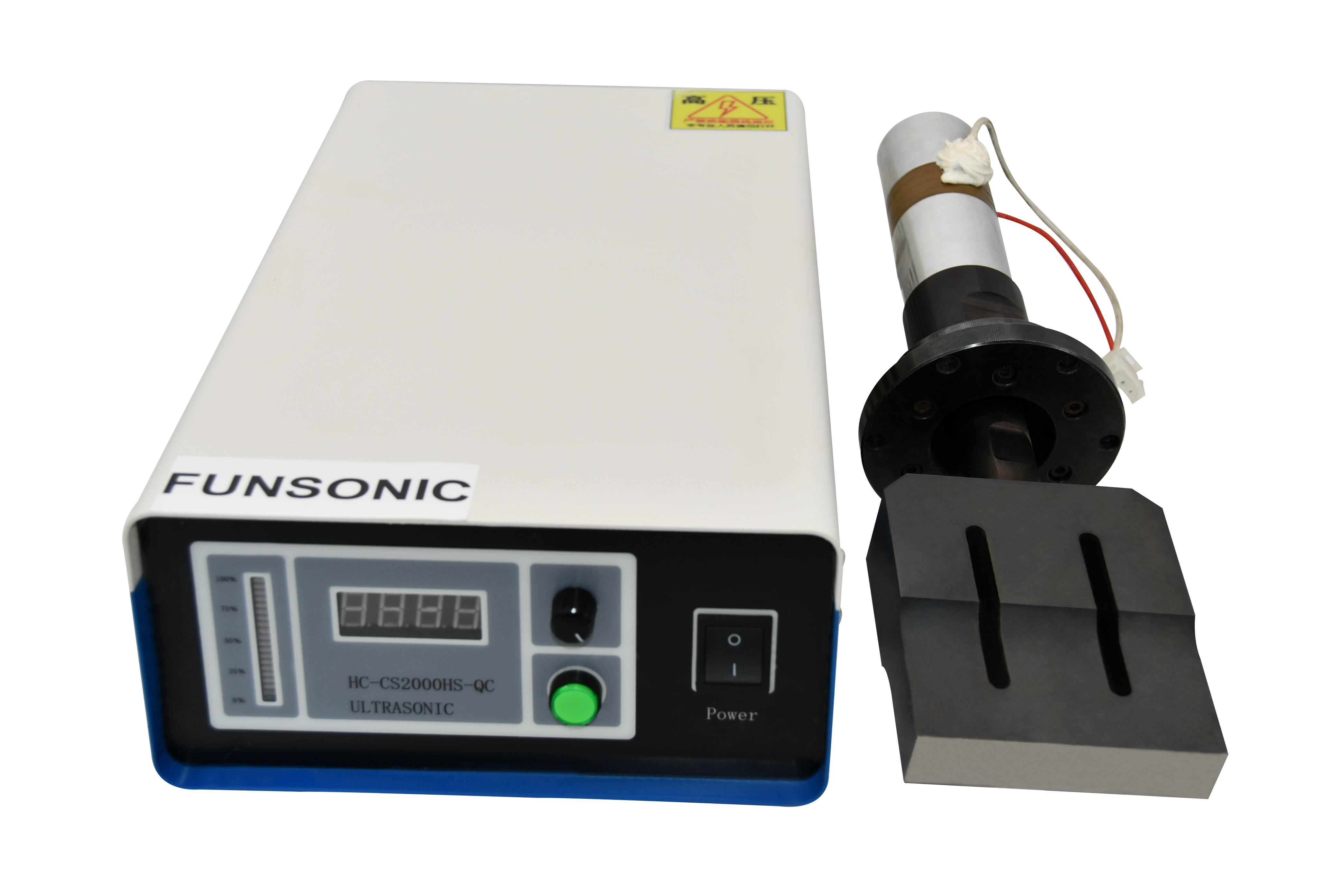
During operation, high-frequency electrical energy from the ultrasonic generator is converted into mechanical vibration by the transducer. The vibration is transmitted through the ultrasonic horn to the fabric layers. Under pressure from the rotary pattern wheel, localized frictional heat is generated at the material interface, causing the thermoplastic fibers to soften and bond.
Unlike conventional sewing, ultrasonic sewing does not create needle holes or leave loose threads. The process can combine sewing, welding, sealing, trimming, cutting, and embossing in a continuous operation.
How Does Ultrasonic Sewing Work?
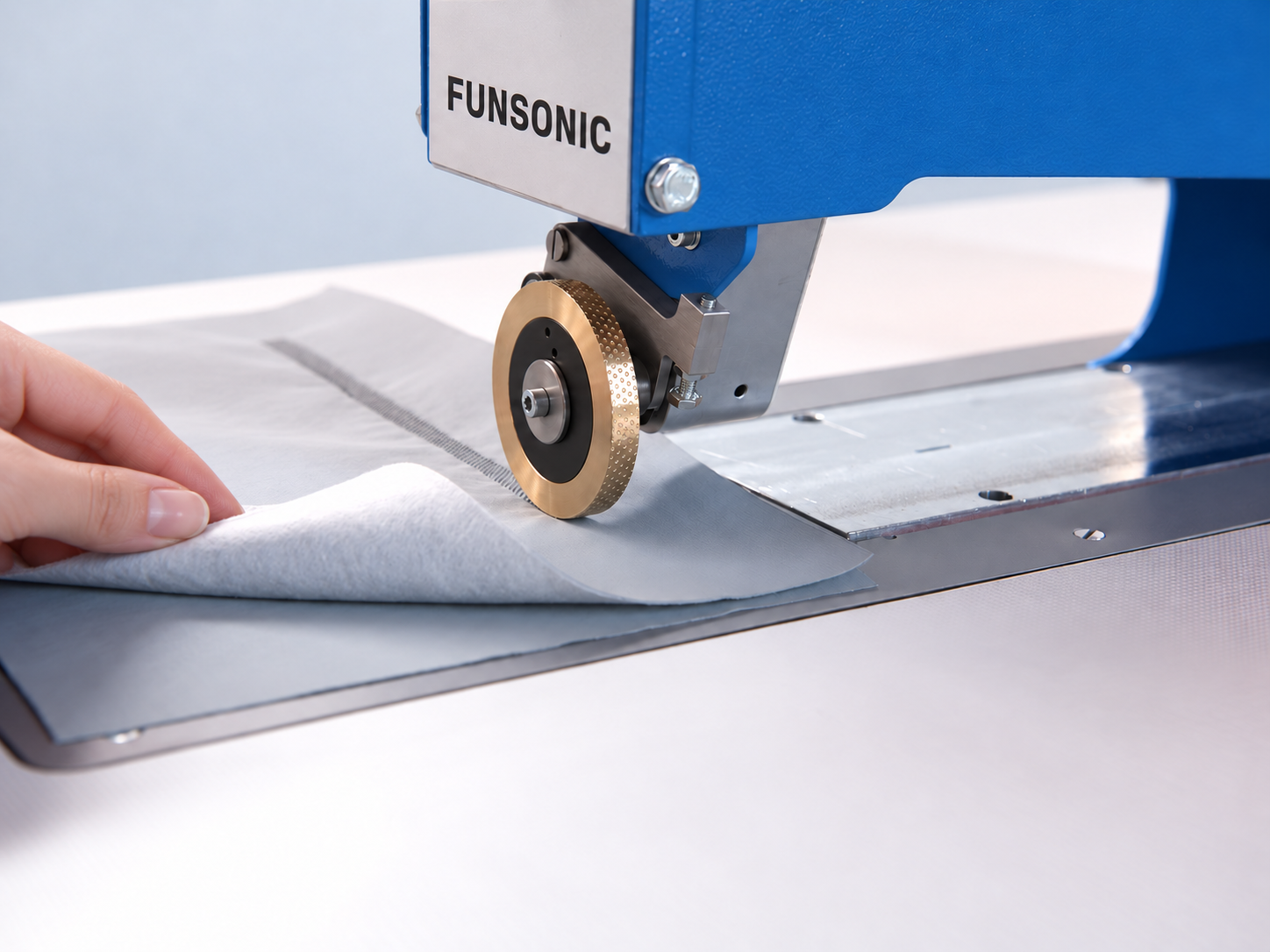
The fabric passes between the ultrasonic welding horn and a rotating pattern wheel. Ultrasonic vibration generates heat directly within the contact area, while the pattern wheel applies pressure and determines the seam shape.
As the wheel rotates, the machine produces a continuous bonded seam. By changing the wheel design and process settings, the same machine can create straight seams, decorative patterns, sealed edges, perforations, or simultaneous cutting and welding.
Ultrasonic Sewing vs. Traditional Sewing
Traditional sewing mechanically joins fabrics using needles and thread. Ultrasonic sewing directly bonds thermoplastic fibers through high-frequency vibration.
This eliminates thread consumption and reduces problems such as broken needles, loose thread ends, and visible needle holes. Ultrasonic processing can also combine several production steps, including seam formation, edge cutting, and embossing.
However, ultrasonic sewing is material-dependent. It is mainly intended for thermoplastic synthetic fabrics and is not a direct replacement for conventional sewing on pure cotton, wool, or other non-thermoplastic natural fibers.
Main Processing Functions
Ultrasonic sewing machines can be configured for:
- Continuous fabric bonding
- Seam welding
- Edge sealing
- Simultaneous cutting and sealing
- Decorative embossing
- Pattern formation
- Material trimming
- Synthetic fabric slitting
- Multi-layer nonwoven joining
Advantages of Ultrasonic Sewing
The process provides fast and repeatable production without needles, sewing thread, or adhesives. Heat is generated only at the bonding interface, allowing rapid start-up and reducing thermal exposure to surrounding material.
Interchangeable pattern wheels make it possible to adapt the seam design to different products. Adjustable ultrasonic power, pressure, and feeding speed help optimize the process for varying material compositions and thicknesses.
Material Compatibility
Ultrasonic sewing works best with materials containing thermoplastic fibers. Common compatible materials include polypropylene nonwoven fabric, polyester, nylon, polyethylene-based textiles, and thermoplastic laminates.
Material composition has a significant effect on bonding performance. Before selecting a machine, customers should confirm the material type, thickness, number of layers, seam requirements, and production speed. For new or mixed materials, sample testing is recommended.
Customized Ultrasonic Sewing Solutions
The ultrasonic sewing system can be customized according to the customer's material, product dimensions, seam width, pattern design, and automation requirements.
Available options may include customized pattern wheels, fabric guides, feeding mechanisms, cutting functions, pressure control, worktables, and integration with automated production lines.