Blog
Technical articles, application insights, and engineering resources about ultrasonic technology and industrial processes.
Technical Articles
Technical articles, application insights, and engineering resources about ultrasonic technology and industrial processes.
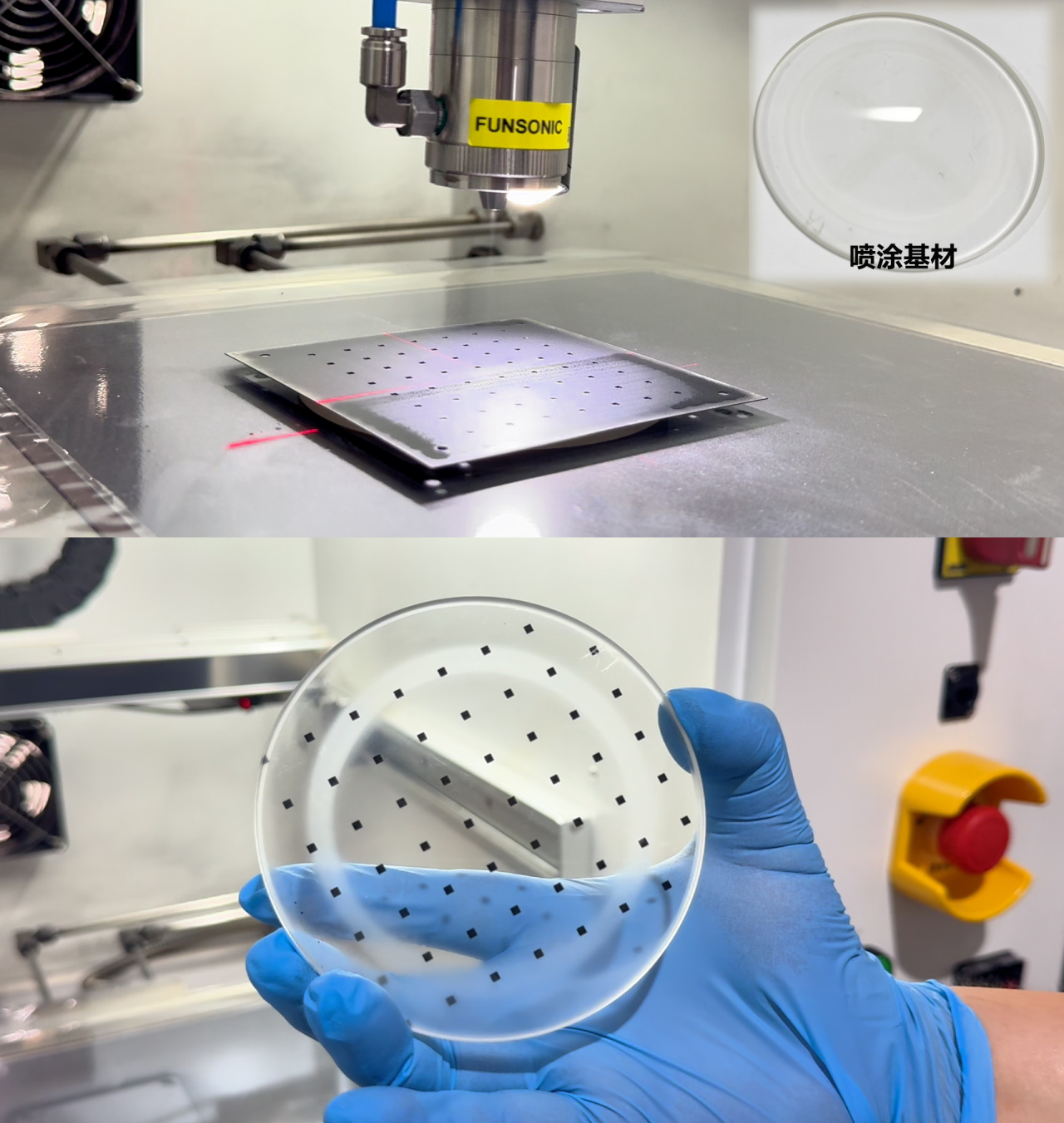
Ultrasonic Spray Coating for Perforated Plates
Learn how ultrasonic spray coating can improve coverage, flow control, and repeatability on perforated plates while reducing pore-blockage risk.
View product line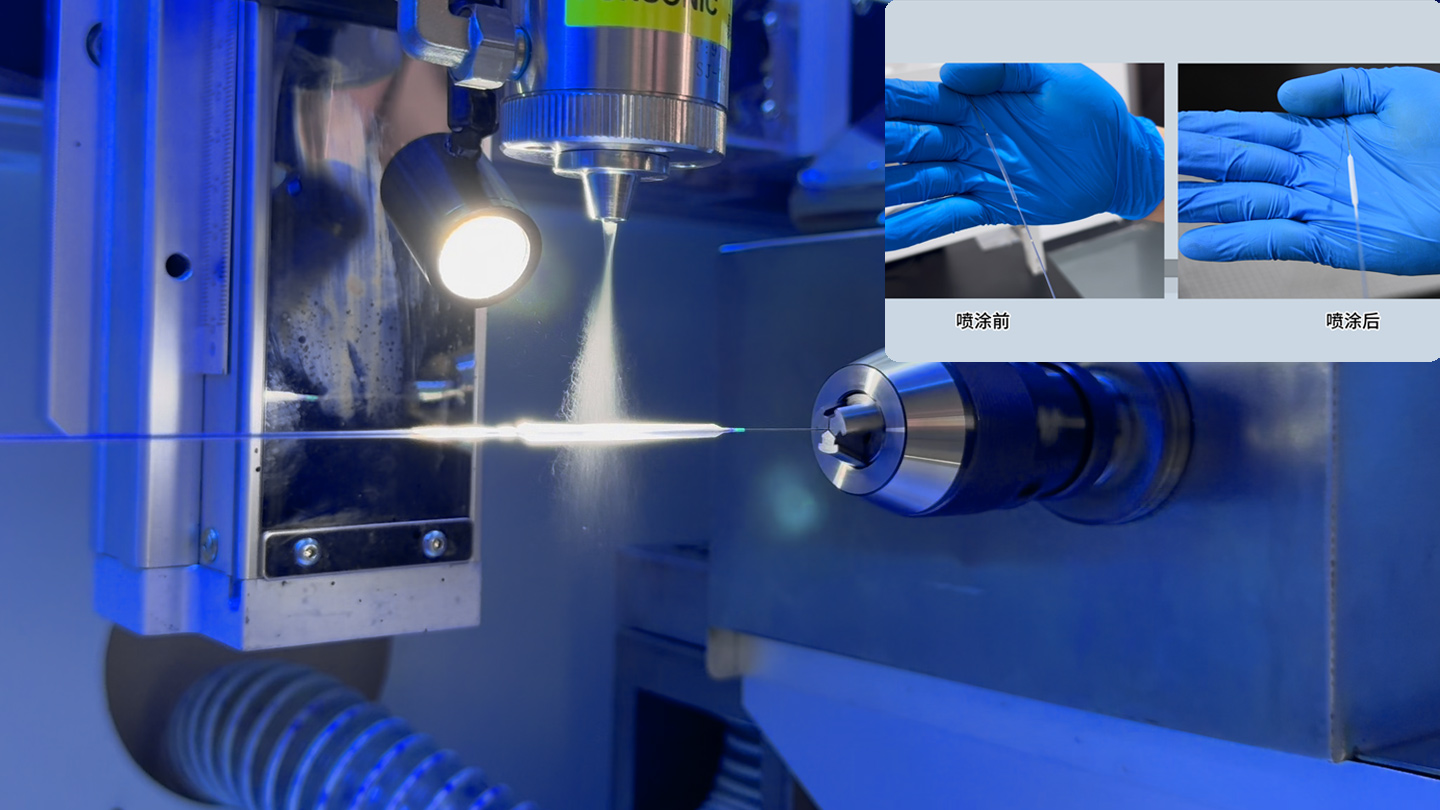
What Is Ultrasonic Spray Coating? A Practical Guide for Process Engineers
Ultrasonic Spray Coating is an advanced precision coating technology that uses high-frequency ultrasonic vibrations to atomize liquid materials into a controlled spray of fine droplets. Unlike conventional spray coating methods that rely on high-pressure air or hydraulic pressure to break liquid into droplets, ultrasonic spray coating uses ultrasonic energy generated by a vibrating nozzle surface. This enables precise control over droplet size, spray pattern, coating thickness, and material deposition. For process engineers, this technology provides a reliable solution when traditional coating methods struggle to achieve ultra-thin, uniform, and repeatable coatings — especially for applications involving advanced materials, sensitive substrates, and high-value coating solutions. Today, ultrasonic spray coating is widely used in industries including fuel cells, batteries, medical devices, electronics, semiconductor manufacturing, solar energy, and precision surface treatment.
View product line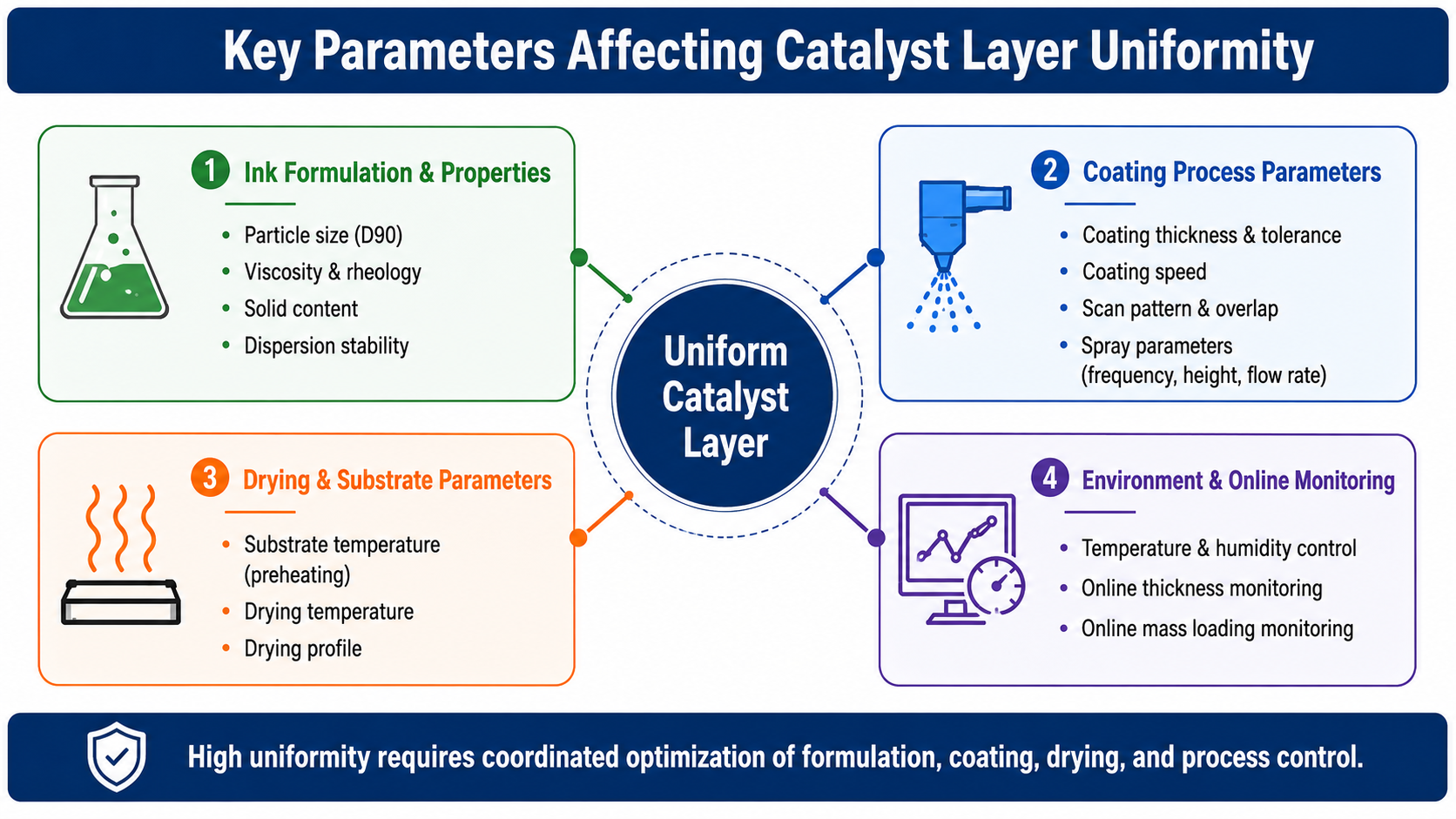
Fuel Cell MEA Coating: Key Parameters for Catalyst Layer Uniformity
Fuel cell performance and durability strongly depend on the uniformity of the catalyst layer (CL) within the membrane electrode assembly (MEA). Uneven catalyst distribution can lead to inconsistent electrochemical activity, local current density variations, hotspot formation, and accelerated degradation of fuel cell stacks. This article introduces the key parameters affecting catalyst layer uniformity, including catalyst ink properties, coating process conditions, drying control, substrate temperature, and online monitoring methods. Special attention is given to ultrasonic spray coating technology, which enables precise droplet control, low material waste, and uniform catalyst deposition for advanced MEA manufacturing. By optimizing ink formulation, coating parameters, and process control, manufacturers can achieve highly uniform catalyst layers with improved fuel cell efficiency, longer lifetime, and reduced platinum loading.
View product line