What Is Ultrasonic Spray Coating? A Practical Guide for Process Engineers
Introduction: Understanding Ultrasonic Spray Coating Technology
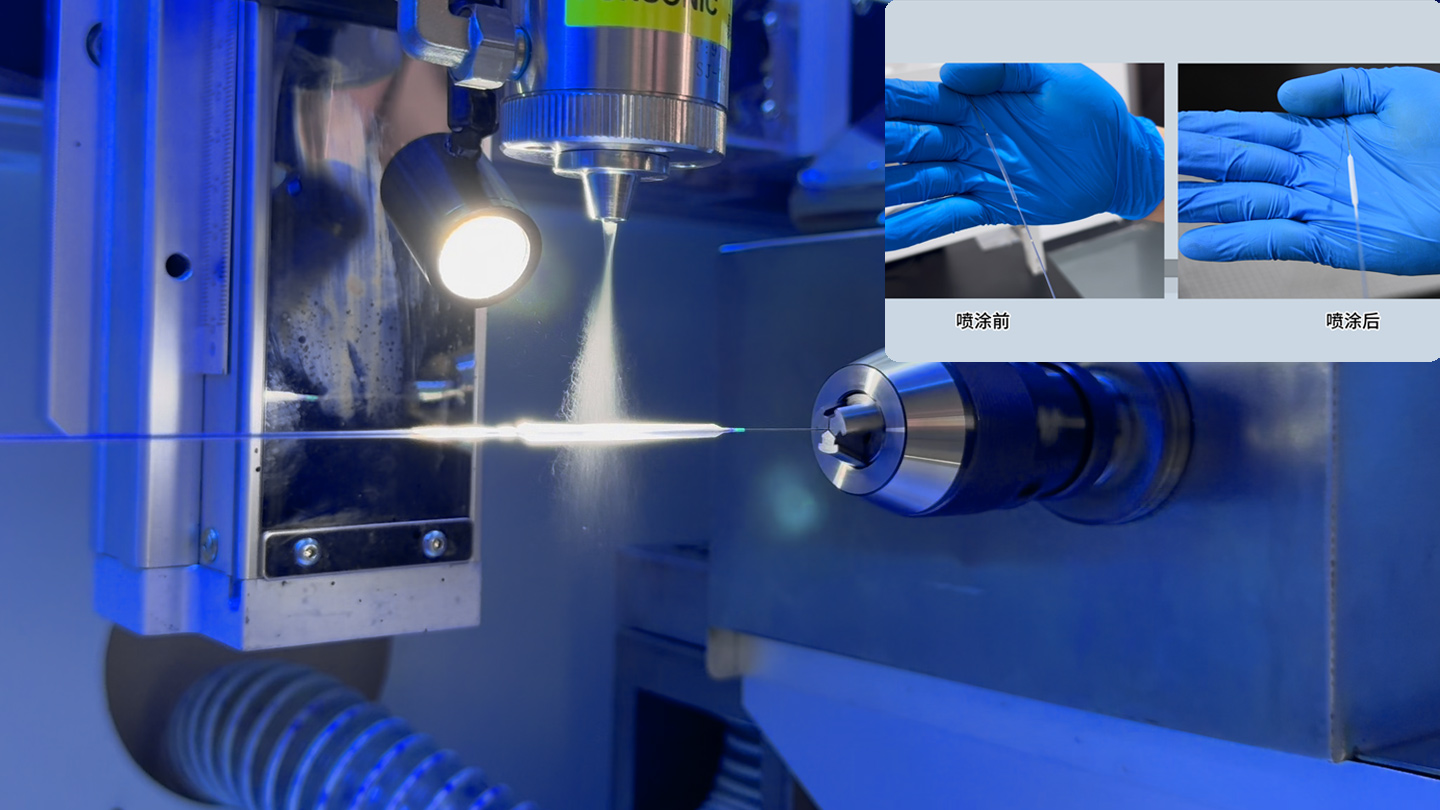
Ultrasonic Spray Coating is an advanced precision coating technology that uses high-frequency ultrasonic vibrations to atomize liquid materials into a controlled spray of fine droplets.
Unlike conventional spray coating methods that rely on high-pressure air or hydraulic pressure to break liquid into droplets, ultrasonic spray coating uses ultrasonic energy generated by a vibrating nozzle surface. This enables precise control over droplet size, spray pattern, coating thickness, and material deposition.
For process engineers, this technology provides a reliable solution when traditional coating methods struggle to achieve ultra-thin, uniform, and repeatable coatings — especially for applications involving advanced materials, sensitive substrates, and high-value coating solutions.
Today, ultrasonic spray coating is widely used in industries including fuel cells, batteries, medical devices, electronics, semiconductor manufacturing, solar energy, and precision surface treatment.
How Does Ultrasonic Spray Coating Work?
The working principle of ultrasonic spray coating is based on the conversion of electrical energy into high-frequency mechanical vibration.
The core component of the system is the ultrasonic nozzle. Inside the nozzle assembly, an ultrasonic transducer converts electrical signals into mechanical vibrations, typically operating at frequencies ranging from tens to hundreds of kilohertz.
When coating liquid is delivered onto the vibrating nozzle surface, the ultrasonic energy creates capillary waves on the liquid surface. Once the vibration energy exceeds the liquid’s surface tension, the liquid breaks apart into a fine mist of uniform droplets.
The generated droplets are then transported toward the substrate through gravity, carrier gas, or controlled airflow.
The final coating quality depends on several factors:
· Ultrasonic frequency
· Liquid viscosity
· Surface tension
· Liquid flow rate
· Nozzle-to-substrate distance
· Scanning speed
· Substrate characteristics
By optimizing these parameters, engineers can achieve highly controlled coating thickness and excellent layer uniformity.
The Key Components of an Ultrasonic Spray Coating System
A complete ultrasonic spray coating system typically consists of several integrated components.
1. Ultrasonic Spray Nozzle
The ultrasonic nozzle is the heart of the coating system.
It includes:
· Ultrasonic transducer
· Horn or resonator structure
· Atomizing tip
· Liquid delivery channel
The nozzle converts electrical energy into ultrasonic vibration and creates the atomization process.
Different nozzle designs are available depending on application requirements, including:
· Standard spray nozzles
· Precision micro-spray nozzles
· Internal gas-guided nozzles
· Custom nozzles for complex geometries
2. Liquid Feeding System
The liquid feeding system delivers coating material to the nozzle with stable and accurate flow control.
Common feeding methods include:
· Syringe pumps
· Peristaltic pumps
· Pressure-driven systems
· Precision metering systems
Stable liquid delivery is essential because fluctuations in flow rate can directly affect coating thickness and uniformity.
3. Motion Control System
For industrial applications, the ultrasonic nozzle is usually integrated with automated motion systems, such as:
· XY coating platforms
· Robotic arms
· Linear stages
· Roll-to-roll systems
Precise movement control ensures consistent coating coverage across the entire substrate.
4. Spray Chamber and Process Environment
A controlled coating environment helps maintain process stability and protects operators and equipment.
Typical functions include:
· Collecting excess spray
· Controlling airflow
· Reducing contamination
· Improving coating repeatability
Why Use Ultrasonic Spray Coating?
Ultrasonic spray coating provides several advantages compared with conventional spray technologies.
1. High Precision and Uniform Coating Thickness
One of the biggest advantages of ultrasonic spray coating is its ability to produce extremely thin and uniform coatings.
Because droplet size and spray distribution can be accurately controlled, engineers can achieve:
· Consistent coating thickness
· Reduced coating defects
· Improved surface coverage
· Better repeatability
This makes ultrasonic spray coating particularly suitable for applications where coating thickness directly affects product performance.
Examples include:
· Fuel cell catalyst layers
· Battery electrode coatings
· Medical device surface modification
· Semiconductor thin films
2. Improved Material Utilization and Reduced Waste
Traditional spray coating methods often generate significant overspray because large amounts of coating material are dispersed into the surrounding environment.
Ultrasonic spray coating produces smaller and more controlled droplets, allowing more coating material to reach the target surface.
Benefits include:
· Lower material consumption
· Reduced waste
· Lower production cost
· Improved environmental performance
For expensive coating materials such as precious metal catalysts, pharmaceutical coatings, and advanced functional materials, this advantage is especially important.
3. Compatibility with a Wide Range of Materials
Ultrasonic spray coating can process many different coating materials, including:
· Polymers
· Ceramics
· Metals
· Nanomaterials
· Biological materials
· Functional coatings
The technology can handle both water-based and solvent-based solutions, depending on system configuration and application requirements.
Applications of Ultrasonic Spray Coating
Electronics and Semiconductor Manufacturing
In electronics manufacturing, ultrasonic spray coating is used for precision deposition of functional and protective layers.
Typical applications include:
· PCB protective coatings
· Semiconductor coatings
· Display manufacturing
· Electronic component protection
The ability to apply thin and uniform layers makes ultrasonic spray coating suitable for increasingly miniaturized electronic devices.
Fuel Cells and Battery Manufacturing
The energy industry is one of the fastest-growing application areas for ultrasonic spray coating.
In fuel cell manufacturing, the technology is used for:
· Catalyst layer coating
· Membrane electrode assembly (MEA) fabrication
· Electrochemical surface modification
Compared with traditional coating methods, ultrasonic spray coating provides better control of catalyst distribution and layer consistency.
In battery manufacturing, it can be used for:
· Electrode coating research
· Functional material deposition
· Advanced battery development
Medical Devices and Biomedical Applications
Medical devices often require precise surface coatings to improve performance and biocompatibility.
Ultrasonic spray coating is used for:
· Drug coating
· Implant surface modification
· Catheter coating
· Medical device functionalization
Its low-pressure atomization process helps protect sensitive materials during coating.
Solar Energy Applications
Solar cell manufacturing requires highly uniform functional layers.
Ultrasonic spray coating can be applied for:
· Anti-reflective coatings
· Conductive coatings
· Functional thin films
The precise material deposition helps improve energy conversion efficiency and production consistency.
Coating Materials and Substrate Considerations
Successful ultrasonic spray coating requires careful consideration of both coating materials and substrate properties.
Coating Material Factors
Important material parameters include:
Viscosity
Higher viscosity liquids may require optimized nozzle selection and process parameters.
Surface Tension
Surface tension influences droplet formation and atomization efficiency.
Solid Content
The concentration of particles or dissolved materials affects final coating thickness.
Solvent Properties
Solvent evaporation rate influences coating morphology and surface quality.
Substrate Preparation
Surface preparation is critical for coating adhesion and durability.
Common preparation methods include:
· Cleaning
· Plasma treatment
· Surface activation
· Primer application
A properly prepared substrate ensures stronger bonding between the coating layer and the surface.
Key Process Parameters for Optimization
To achieve stable coating performance, engineers must optimize several process parameters.
Ultrasonic Frequency
Frequency directly influences droplet size.
Generally:
· Lower frequency → larger droplets
· Higher frequency → smaller droplets
Smaller droplets typically provide smoother and thinner coatings.
Liquid Flow Rate
Flow rate determines how much material reaches the substrate.
A higher flow rate generally increases coating thickness, while excessive flow may reduce coating uniformity.
Nozzle-to-Substrate Distance
The distance between nozzle and substrate affects:
· Spray pattern
· Droplet evaporation
· Coating uniformity
Proper adjustment is necessary for different coating materials and applications.
Scanning Speed
The movement speed of the nozzle affects deposition amount.
Slower movement usually increases coating thickness, while faster movement produces thinner layers.
Ultrasonic Spray Coating Equipment Maintenance
Regular maintenance is essential to maintain coating quality.
Important maintenance tasks include:
· Cleaning the ultrasonic nozzle
· Checking liquid channels
· Inspecting transducer performance
· Preventing clogging
· Verifying system calibration
Because ultrasonic nozzles operate at high frequencies, contamination or damage to the vibrating surface can significantly affect atomization performance.
Advantages and Limitations of Ultrasonic Spray Coating
Advantages
High Precision
Excellent control of droplet size and coating thickness.
Low Material Waste
Higher transfer efficiency compared with traditional spray methods.
Wide Material Compatibility
Suitable for various functional coatings.
Gentle Coating Process
Low-pressure atomization protects sensitive substrates.
Limitations
Initial Equipment Investment
The initial cost is generally higher than conventional spray equipment.
Process Development Required
Different materials require optimization of parameters.
Lower Throughput for Some Applications
For very large-area high-speed coating, alternative technologies may sometimes provide higher production rates.
Future Trends of Ultrasonic Spray Coating Technology
The future development of ultrasonic spray coating is focused on:
Advanced Automation
Integration with:
· AI process monitoring
· Robotic systems
· Automated quality inspection
New Functional Materials
Growing demand for:
· Nanomaterials
· Energy materials
· Biomedical coatings
· Advanced electronics
will continue expanding ultrasonic spray coating applications.
Customized Industrial Solutions
More manufacturers are developing application-specific ultrasonic coating systems for complex requirements, including:
· Micro-scale coating
· Internal surface coating
· Precision medical components
· Next-generation energy devices
Conclusion: Why Ultrasonic Spray Coating Matters for Engineers
Ultrasonic Spray Coating is more than just an alternative spraying method. It is a precision coating technology designed for applications where uniformity, material efficiency, and process control are critical.
By using ultrasonic vibration instead of traditional pressure-based atomization, engineers can achieve thinner coatings, better material utilization, and improved process repeatability.
As industries continue moving toward advanced materials and miniaturized products, ultrasonic spray coating will play an increasingly important role in manufacturing the next generation of electronics, energy systems, medical devices, and functional surfaces.